
Private Pilot Licence PPL(A)
The Private Pilot Licence (PPL-A) is the most common pilot licence in the world. It entitles you to fly single-engine piston aircraft privately worldwide, with no maximum take-off weight restriction.
What can you fly with a PPL(A)?
Aircraft Type
Single-engine piston aircraft with no maximum take-off weight limit
Flight Rules
VFR, day and night (with additional rating). Non-commercial flights only.
Validity
The licence is valid for life. The SEP class rating must be renewed every 2 years.
Operating Area
Worldwide
With the PPL(A) licence and SEP rating (acquired together), you are permitted to fly single-engine piston aircraft privately worldwide—from a small Cessna to a high-performance Cirrus SR22 Turbo. After obtaining your licence, you may carry passengers and share the flight costs. On EU-registered aircraft, flying abroad is straightforward. VFR flights are allowed; night and instrument ratings can be acquired separately.
The PPL(A) licence is valid for life, but the SEP class rating must be renewed every 2 years by a proficiency check with a flight instructor or examiner. The EASA licence is internationally recognised, so you can charter aircraft abroad without issues.
Requirements
Theory Training
- Air Law
- Navigation
- Aircraft General Knowledge
- Communication
- Flight Performance and Planning
- Human Performance and Limitations
- Meteorology
- Operational Procedures
- Principles of Flight
The theoretical training covers 9 subjects. Depending on the flight school, between 10 and 30 hours of classroom instruction are offered.
To prepare optimally for the theory exam, you should plan for at least 100 hours of self-study. PilotExam offers you the ideal platform to train with the latest question bank.
The theory exam consists of 9 to 15 questions per subject. You must answer at least 75% correctly to pass. How much of the official question catalogue is published is decided by each national aviation authority: in Germany, Austria and Luxembourg around 50% of the exam questions are published including their answers, while in other countries such as the Czech Republic it is about 75%. The unpublished questions come from the same learning objectives: some are variations of the known questions, others cover an aspect of a topic that no published question addresses. So don't just memorise the questions — use each one as a way into its topic and work through it with your textbook or course until you can confidently answer questions on the remaining aspects too.
The theory exam may be split into parts. It is considered passed if all subjects are completed within 18 months from the first exam sitting. The practical test must then be completed within 24 months.
Practical Training
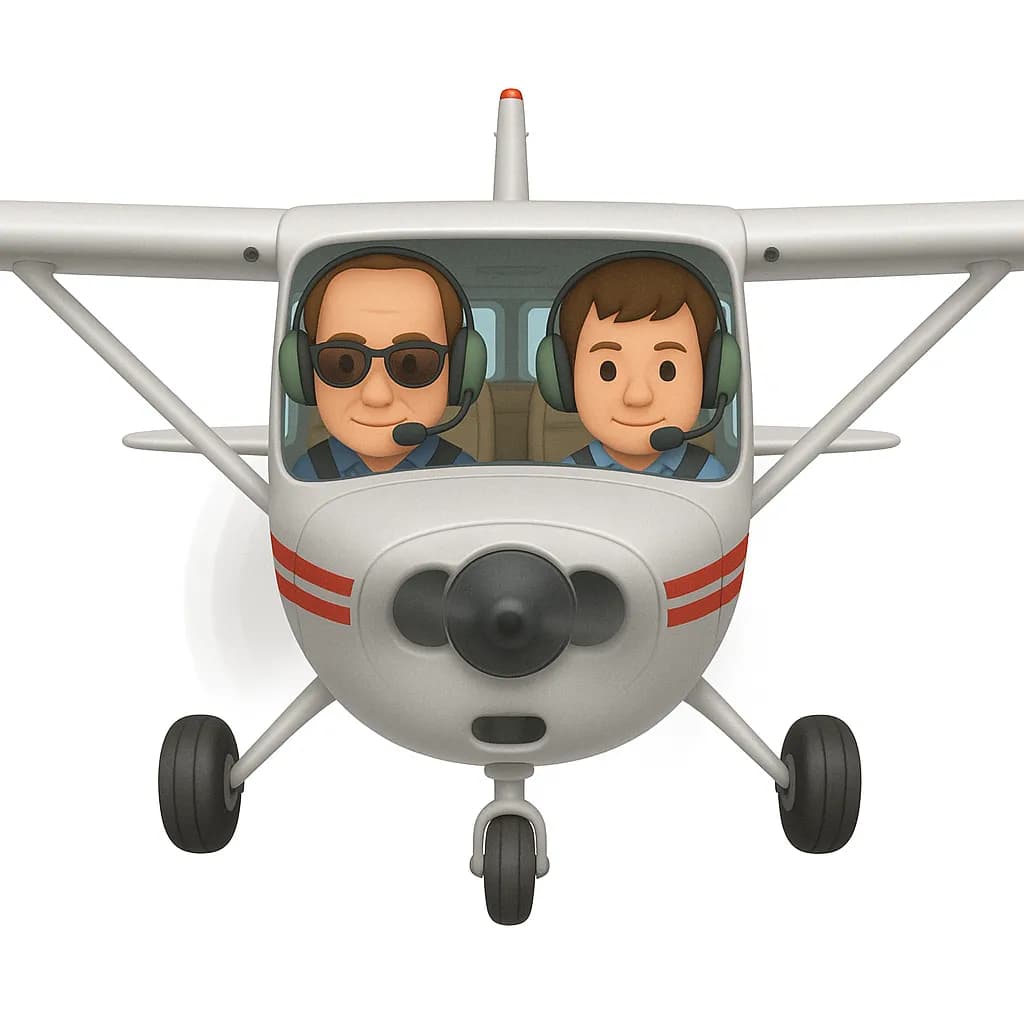
In the practical training, you will learn the basics of flying, practice emergency procedures, navigation, and how to use radio and navigation instruments.
The practical training includes at least 45 flight hours, of which at least 10 hours must be solo flights. At least 5 of these hours must be cross-country flights, including one flight with a minimum distance of 270 km and two landings at different airfields.
During your training, you must also operate at controlled airports.
Examination
The practical exam takes place at the end of your training. The examiner will assess your flight planning, pre-flight checks, flying skills, and your ability to safely operate the aircraft in emergency situations. The check ride typically lasts about 90 minutes.
Costs
The cost of pilot training varies depending on the flight school and aircraft type. The average total cost is between €10,000 and €20,000. Use our cost calculator to estimate your individual training expenses.
Training Path
Medical Class 2
The medical certificate should be obtained before the training starts.
Theory Training
The theory training consists of 9 subjects. It usually takes 100 hours of self-study.
Practice on PilotExamRadio Operator's Certificate
The radio certificate should be obtained before the training starts.
Practice on PilotExamFirst Flight
Basic flight maneuvers and aircraft control.
Solo Flight
First solo flight without a flight instructor.
Practical Exam
The completion of your pilot training.
Getting the License
Congratulations, you made it!
License Comparison
| License | 🛩️Private Pilot License (PPL-A) | 🛩️Light Aircraft Pilot License (LAPL-A) | 🛩️Sport Pilot License (SPL) |
|---|---|---|---|
| Requirements | |||
| Min. Age | 17 | 17 | 16 |
| Min. Flight Hours | 45 | 30 | 15 (Glider) / 30 (Motor glider/UL) |
| Medical Class | Class 2 | Class 2 | Class 2 |
| Radio Operator's Certificate | Radio Operator's Certificate | Radio Operator's Certificate | Radio Operator's Certificate |
| Capabilities | |||
| Max. Take-Off Weight | Unlimited | 2,000 kg | 600 kg |
| Passenger Rating | Yes | After 10 hours | After 10 hours |
| Validity | Worldwide | Europe | National / Recognized in the EU |
| Cost | |||
| Total | 10.000€ - 25.000€ | 6.000€ - 15.000€ | 3.000€ - 8.000€ |
Frequently asked questions
* The prices are approximate estimates and may vary depending on the flight school and aircraft type. The data is provided without any warranty.